


19 Feb 2026 18:00 — 19:30
Location: online
To register and receive the link contact yvonne.billimore[at]bioartsociety.fi by 17 February
Originally programmed to take place during our Field_Notes – Living Methodologies public programme, May-Britt Öhman now joins us online this February to share her work with SING Sábme.
May-Britt Öhman’s presentation revolves around the practical work with decolonizing science and education, through training programs and research, and more concretely the SING Sábme.
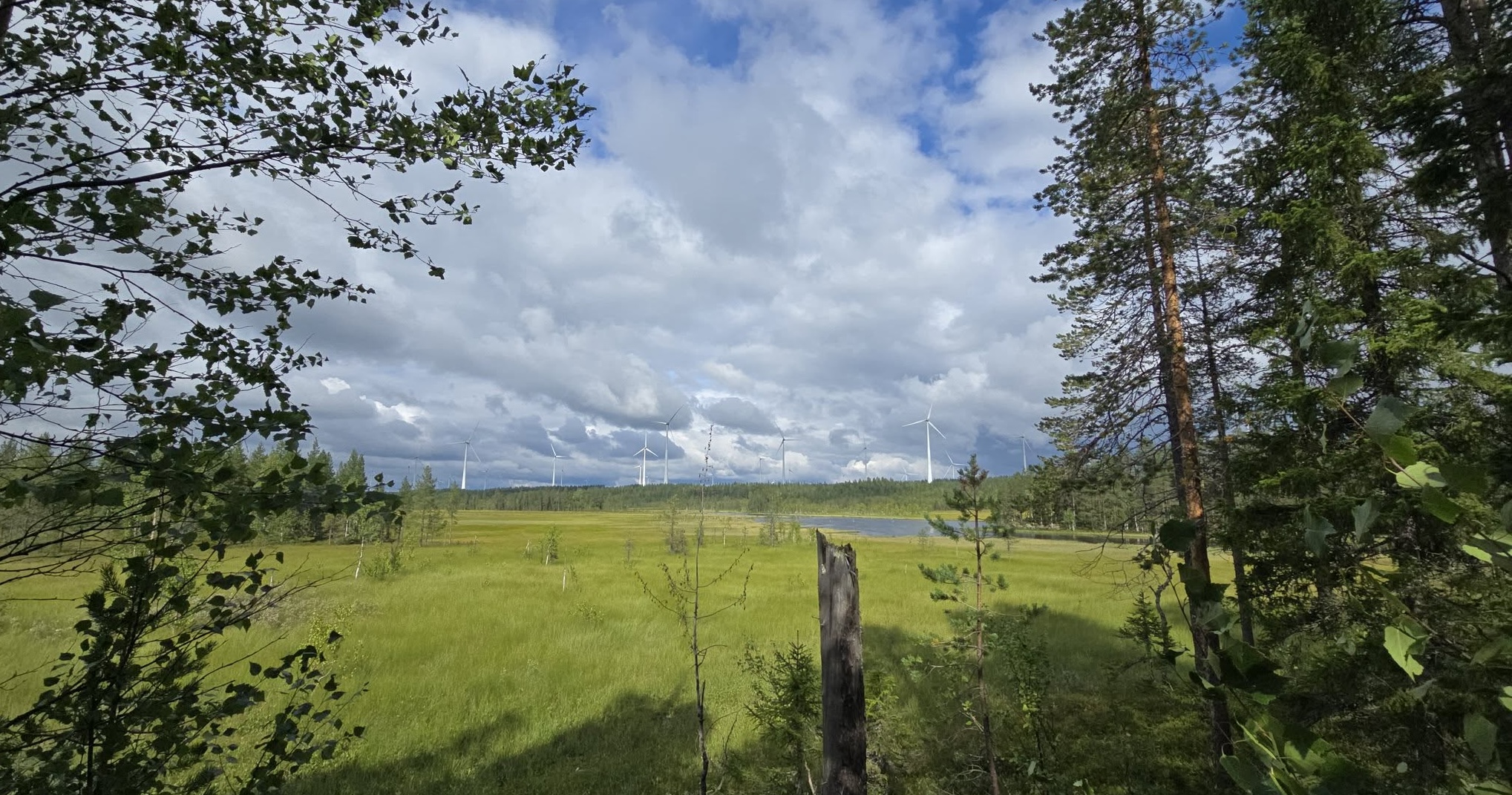
The first ever SING (Summer Internship for Indigenous Peoples in Genomics) Sábme took place during August 10-16, 2025 in the lands of the Flakaberg group within Gällivare Forest Sámi village. SING Sábme is a collaboration between Uppsala University’s Centre for Multidisciplinary Studies on Racism (CEMFOR), the Faculty of Native Studies at the University of Alberta, the University of British Columbia’s Department of Forest and Conservation Sciences, and local Sámi community members and experts. SING Sábme builds on the SING Canada approach and has been developed to fit Sábme’s unique cultural, educational and political contexts. A key concern for local reindeer herders is the many intrusions and increasing destruction of reindeer lands, and thereby into a core of Sámi culture. A major concern at the moment is the planned establishment of wind power – which is supported with a hollow argument that it is supposedly “green”. This was therefore made into the main focus of the 2025 workshop.
The 2025 workshop provided hands-on, place-based education in Sámi cultural practices and practical and technical skill-building in environmental genomics approaches. It was supplemented by learning sessions that introduced a critical and ethical framework for considering Indigenous science and educational approaches.
The SING originated in the USA, and has grown into a global SING Consortium, including SING Canada, Aotearoa, Australia and Mexico. The concept of SING is an annual all-expenses-paid one-week intensive program designed to build Indigenous governance capacity and scientific knowledge. Indigenous participants–university students, academic and community fellows–are invited to engage in hands-on classroom, lab, and field training in genomic science, bioinformatics, Indigenous knowledges, and bioethics.
In her presentation, Öhman will talk about the work towards organising the SING Sábme 2025, some about what took place during the workshop, and some of our aspirations, hopes and ambitions for the future.
SING Sábme was to a large extent funded as an Indigenous-led place-based project within the larger global research program ⴰⵔⵔⴰⵎⴰⵜ Ărramăt: Strengthening Health And Wellbeing Through Indigenous-Led Conservation and Sustainable Relationships With Biodiversity, based at University of Alberta, funded by Government of Canada’s New Frontiers in Research Fund (NFRF), along with funds of the Swedish research councils FORMAS and Vetenskapsrådet. Furthermore the participating scientists have to a large extent contributed with their own time, for preparation and research design.
May-Britt Öhman is associate professor in environmental history, researcher at the Centre for Multidisciplinary Studies on Racism, CEMFOR, Uppsala University, Sweden. Öhman is Lule and Forest Sámi of the Lule River valley, and has Tornedalian heritage. Öhman leads the research group Dálkke: Indigenous Climate Change Studies, funded by the Swedish National Research Program on Climate Change. Öhman worked extensively with the establishment and development of the research field Indigenous Climate Change Studies, centering Indigenous peoples’ expertise, experiences, perspectives and epistemologies, through publications, film making, organization of seminar and workshops, and network building.
Image: Courtesy of SING Sábme