

A moment in Bioart Conservation History: Dual Taxonomies bridged by Two Museums
On 20th November 2025, Postdoctoral researcher Kare Liimatainen and Museum Caretaker Henriikka Rossi arrived from the Botany Unit / Mycology Team of the Finnish Museum of Natural History LUOMUS to the Finnish National Art Collection at Kiasma Contemporary Art Museum for a bioart biopsy.
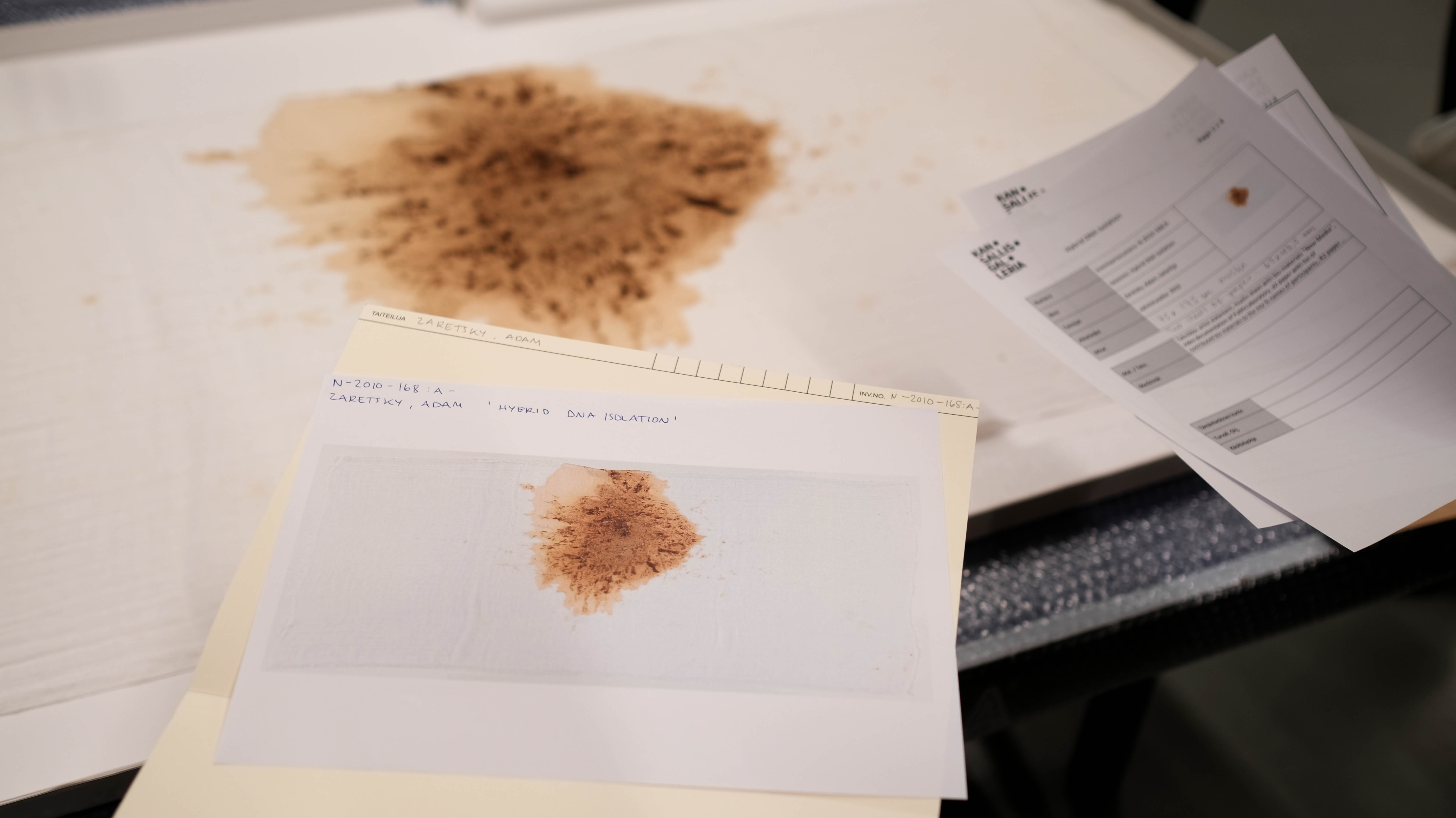
Entrance was cleared into the Finnish National Art Collection at Kiasma for mold sampling and cross referencing of Hybirid DNA Isolation, a bioart new media monoprint. The bioart was donated by myself, artist Adam Zaretsky, to the Finnish National Contemporary Art Collection, as part of ‘‘DIY-Hydroponic HYBRID DNA ISOLATION Skill-Share Lab: How to Extract DNA from Anything Living in the Laboratory or in your Kitchen: A Compare and Contrast Vegetarian Laboratory and Hobbyist Workshop”, in the Herbologies/Foraging Networks programme by Pixelache at Kiasma museum on the 27th March 2010.
During his Hybrid DNA Extraction Workshop, I proposed that what the participants were making - new media based on new DNA organic combinations - could be donated to the Kiasma Museum of Contemporary Art collections. It took a while to negotiate the donation and make it a priority, but it has been a quiet fact since January 2012. Kiasma has been looking after, caring for, and preserving what we understand to be the first bioart work included in the Finnish National Galleries collection. Look at the archival entry in the database, view the donation certificate and check out the excellent video documention to get a sense of what happened, and what was archived or not. (See: Pixelache)
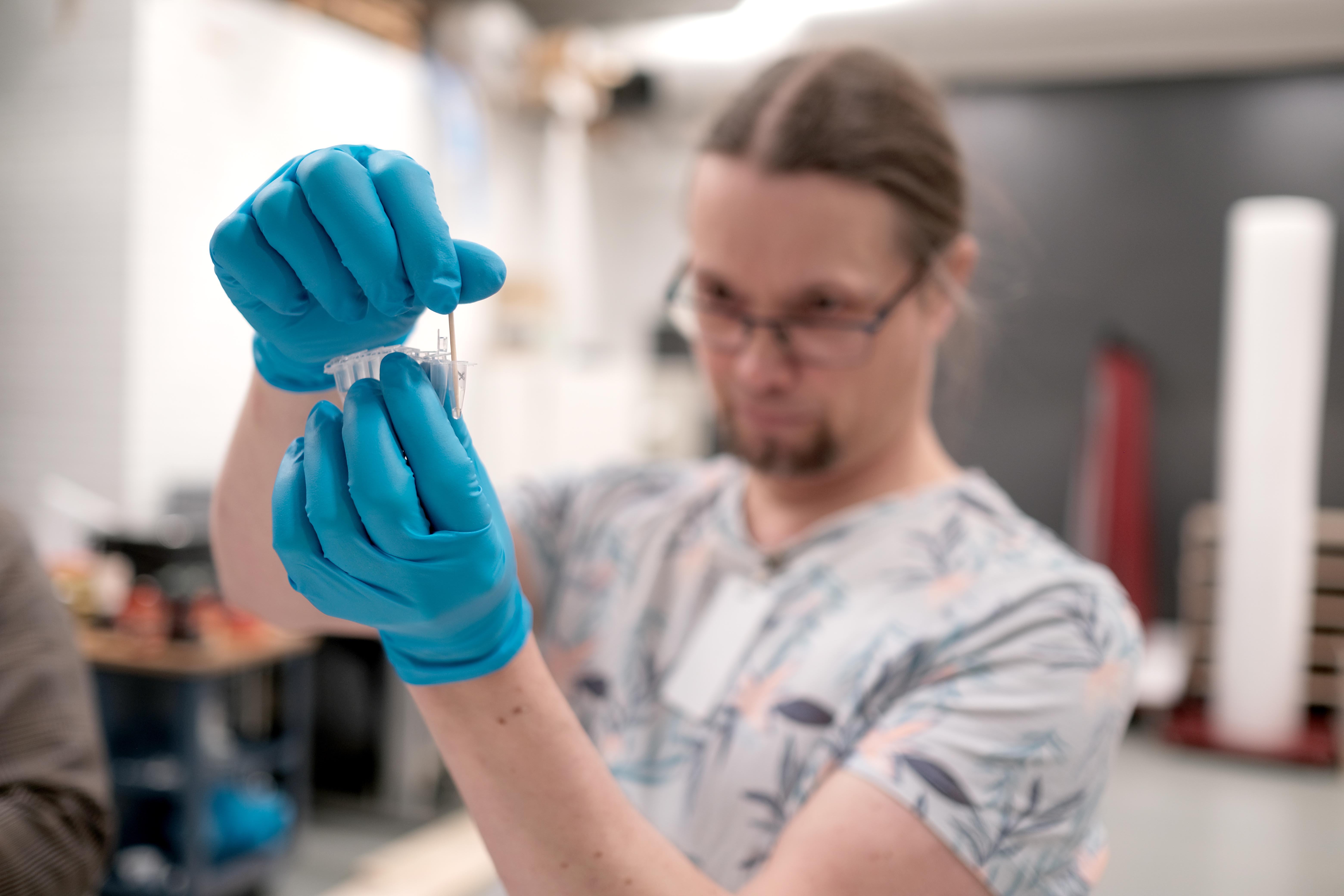
On the afternoon of 20th November 2025, samples were taken of the mold representing resilient fungal art-life. A living part of the bioart donated (object: N-2010- 168:A-) was biopsied for entrance into the Helsinki Fungarium—or Museum of Fungi. Two samples were taken between 13:00 and 14:00 on Thursday, 20th November 2025:
- The first was simply a toothpick point aliquot for direct PCR and DNA barcoding to gain an understanding of the genetic nomenclature or hereditary species, genus and family of fungus we have.
- The second sample was taken from the back and front of the art, with great care and delicacy after receiving a chorus of “Yes” from quorum members present: artist, curator and conservator.
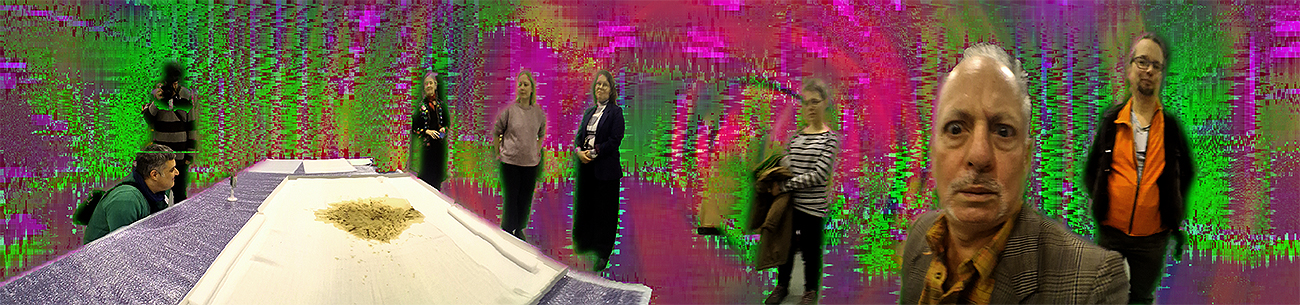 It is important to underscore that the sample is both the art and is not the art, the sample is part of the living bioart, the only known living part of the art based on life in life science as art.
The sample of the mold was transferred from The Museum of Contemporary Art Kiasma’s collection (part of the Finnish National Gallery) to the Museum of Fungus’ collection and accepted as a donation. The mycology team of the Finnish Museum of Natural History, LUOMUS at Kaisaniemi, as witnessed, allowed and freely donated by the quorum (composed of artist, curator and conservator) in the Collection during the collection of the mold for the other collection.
This represents the beginning of an amassed art and science taxonomy. The mold is stored in two museums as a formal sample of dual cultural worth. This overlap is a sort of art and biology history moment. As the living objects or semi-living objects begin to amass Scientific Taxonomy and further Arts Testament, the archival details will spread from the mold’s second permanent home at the Botany Unit / Mycology Team of the Finnish Museum of Natural History, overlapping as well as meteing out a more robust nomenclature in the Finnish National Art Collection.
This resulted in a public presentation at Bioart Society “SOLU Dialogues: Andrew Gryf Paterson and Adam Zaretsky” on conservation on 20th November 2025, in connection with Pixeache’s Archival Tendencies project. The event was opportunity to host an open dialogue discussing the mold that has been growing on and as a part of the artwork — we have named the mold: Curator’s Extremophile — as a rarefied species after 12 years in the dark that may have novel extremophile properties which only a trained molecular mycologist consultant could uncover. In Particular BARC@BioStasis or BARC@BS: (Biomedia Archiving Research Creation) art and science non-conceptual conservation archives of bioart: 1) BioartCryo, Cryogenic Storage Archive 2) Bioart-BioInfo, Bioinformatic Database Archive 3) BioartGermline, GMO Colony as Reproductive Archive.
.jpg)
Some of the bioart specific possibilities of preserving living artworks drew extensively from Arc-Hive Studies in Bioart, Adam Zaretsky, “Biomedia Art Archiving in the Ephemeral Permanent Collection”, ARC-HIVE: CASE STUDIES, Unstill Life, Arc-hive project by Cultivamos Cultura, Hangar, Bioart Society, Zavod Kersnikova, Royal Belgian Institute of Natural Sciences and KONTEJNER (30-31).
Many Thanks from myself, Adam Zaretsky, Ph.D., Bioartist and Kiasma Donor to all involved parties for this historic interdisciplinary and next level bioart conservation work:
Saara Hacklin, Chief Curator of Collections Kiasma
Liisa Vesa, Conservator, The National Museum of Fine Arts Collection Kiasma
Kare Liimatainen Ph.D., Scientist, Mycology and Bryophite team, Finnish Museum of Natural History
Henriikka Rossi, Scientist, Mycology and Bryophite team, Finnish Museum of Natural History
Kira O'Reilly, Artist and BEAK Advisor
Andrew Gryf Paterson, artist-organiser, Pixelache archivist, Doctor of Arts candidate at Aalto University ARTS dept. of Art & Media.
Antti Ahonen, Documentation and spy from Koelse - Association of experimental electronics and the most infamous archive of Helsinki: Museum of Paranormal Technology -
With support from Tuula Niskanen, PhD, Senior Curator, Mycology and Bryophite team, Finnish Museum of Natural History and Kiira Miesmaa, Museum Director, Kiasma Museum of Contemporary Art, Collections of the Finnish National Gallery (The National Museum of Fine Arts Collection at Kiasma)
This entire endeavor was funded by Pixelache Helsinki with support from Bioart Society, as part of 'Archival Tendencies' 2025 process coordinated by Andrew Gryf Paterson in collaboration with Antti Ahonen. The 10 days in Helsinki were hosted by Kitchen Lab Tarvo via in-kind support.