


Reflective blog by Krišjānis Elviks
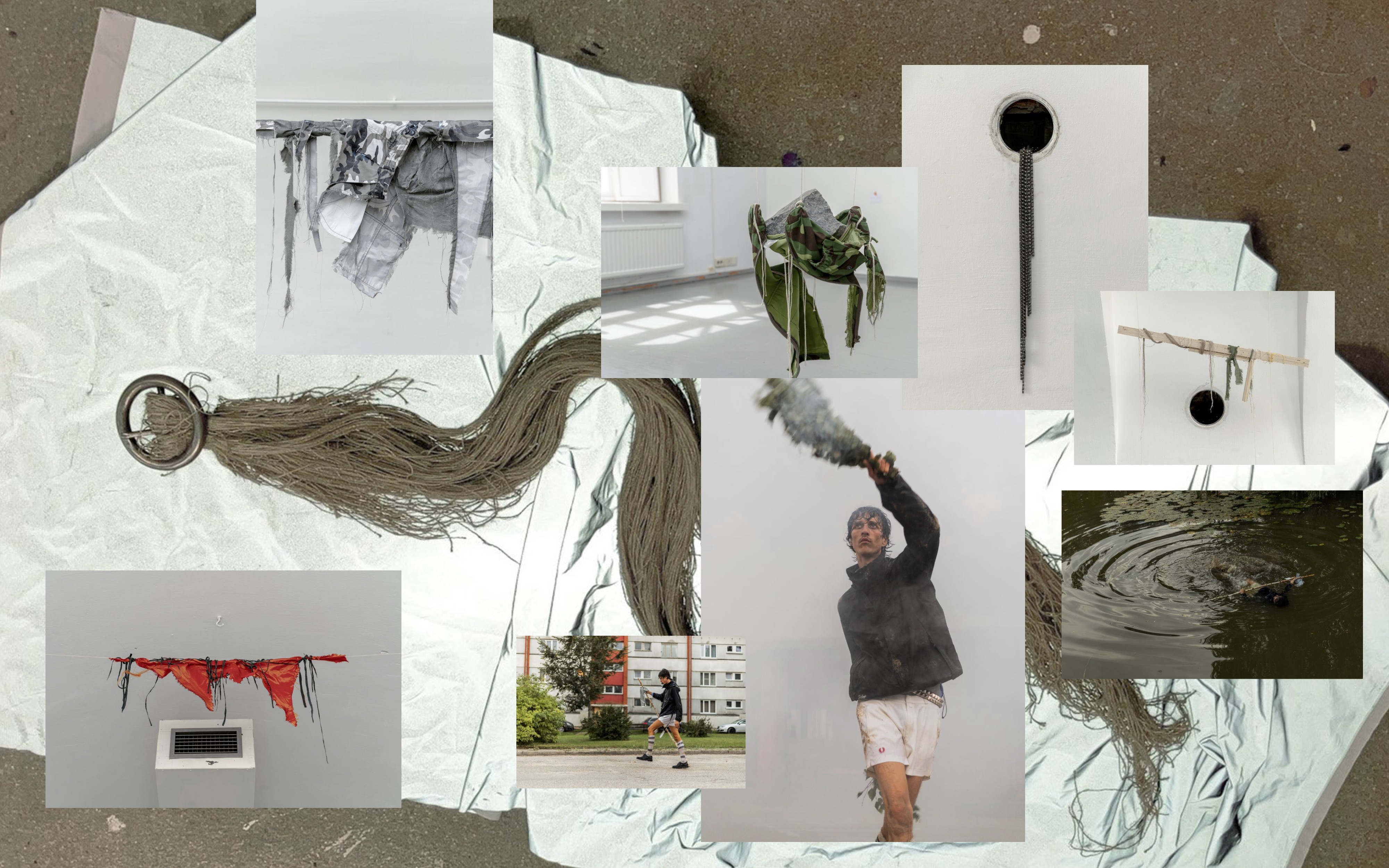
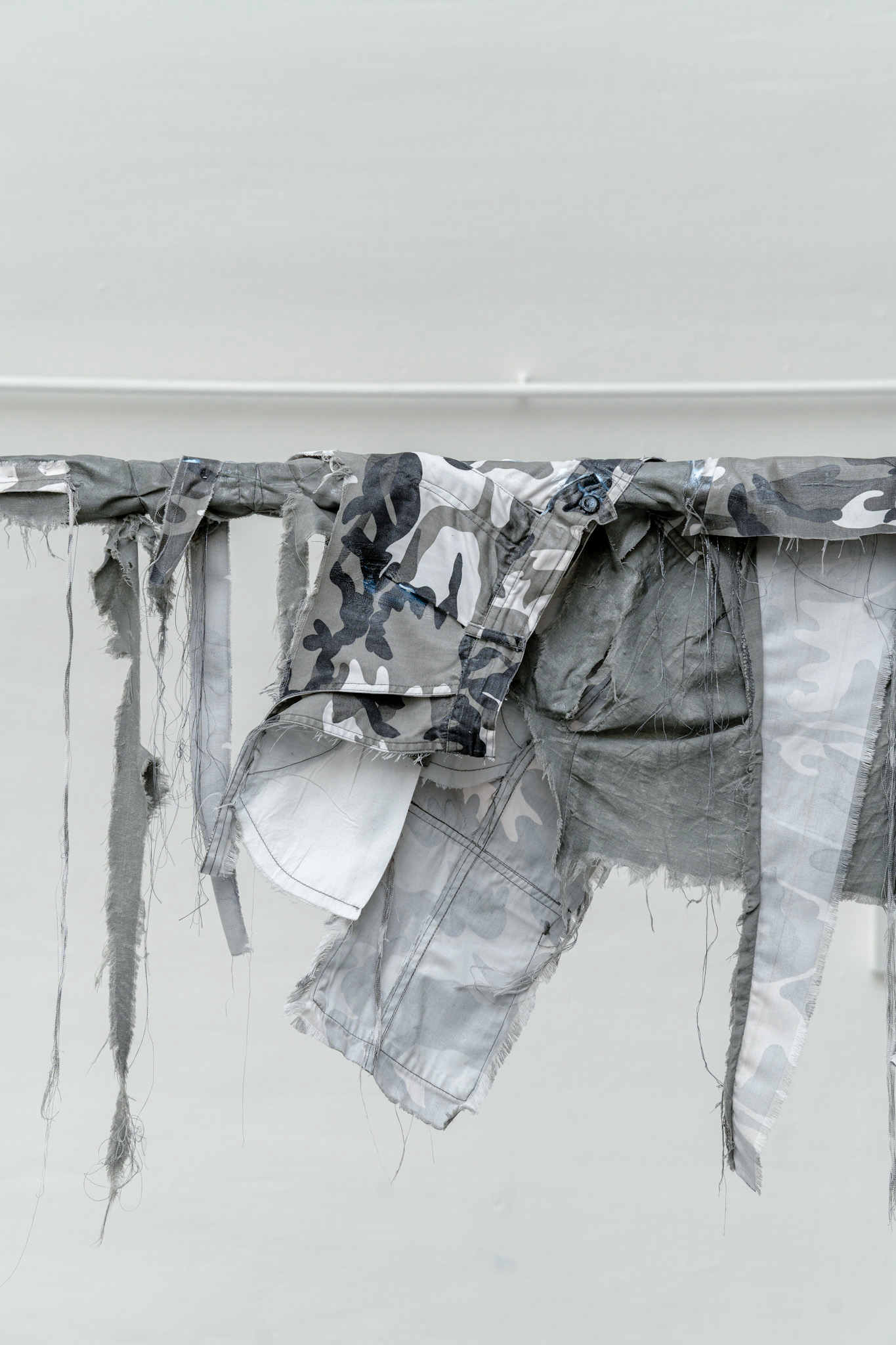
In my practice I work with second hand material deconstructions, mostly textile but not only. It started years ago when I was experimenting with painting: I was not that much interested in painting itself but more how I can change the surface painting is created on. This led me to deconstruction which now is an essential part of my practice. My background is also in performance and scenography – spatial thinking. I get inspired by having long walks and observing the environment, its sounds and choreographies. Luckily for me there came this opportunity to continue my artistic research in the Learning Materials residency, where the military infrastructure inspired me to work on camouflage garment deconstructions and explore the emotion I have been thinking a lot about – rage.
The residency brought me to Suomenlinna Fortress in Helsinki, which for me was a new form of adaptation. From being a person spoiled by the benefits of a big city, going and coming wherever or whenever I want, my daily routines were now directed by the ferry schedules. Soon I observed that Suomenlinna is not really a natural environment; it is a HIS-storical fortress, which means that it is a specific military infrastructure, an open-air UNESCO museum, a party place and a dating spot. This place was now a home for my studio where I continued my research with textile deconstructions, installation making and field recordings.
On the one hand, I was just one of the tourists, but not quite; on the other hand, I was an artist in residence but I was not a resident of the island. Connecting to locals was mostly through conversations about the weather or Canadian geese that were invading the island: that some of them were aggressive, and that no one knew why they appeared, and that they sh*t everywhere.
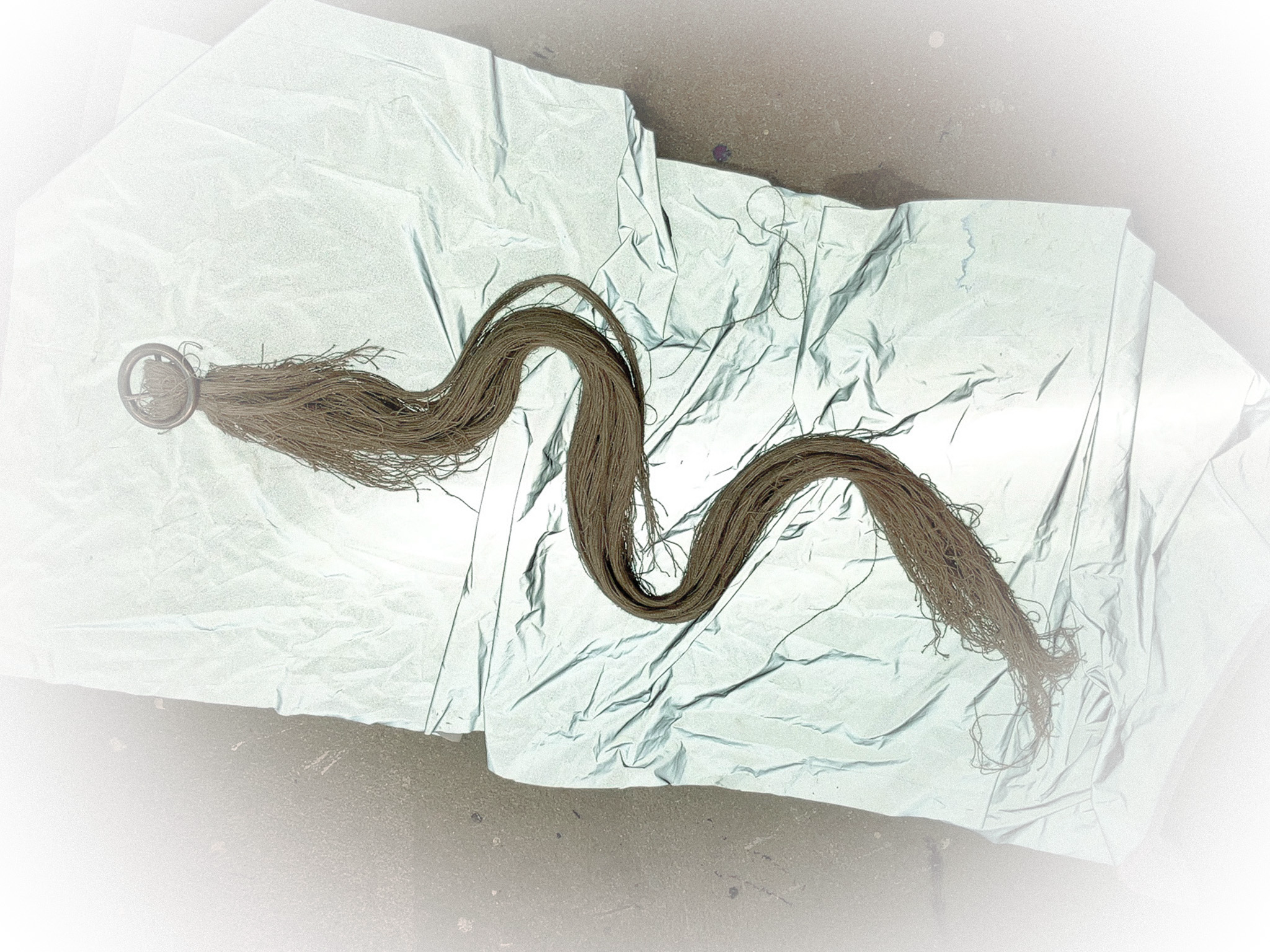
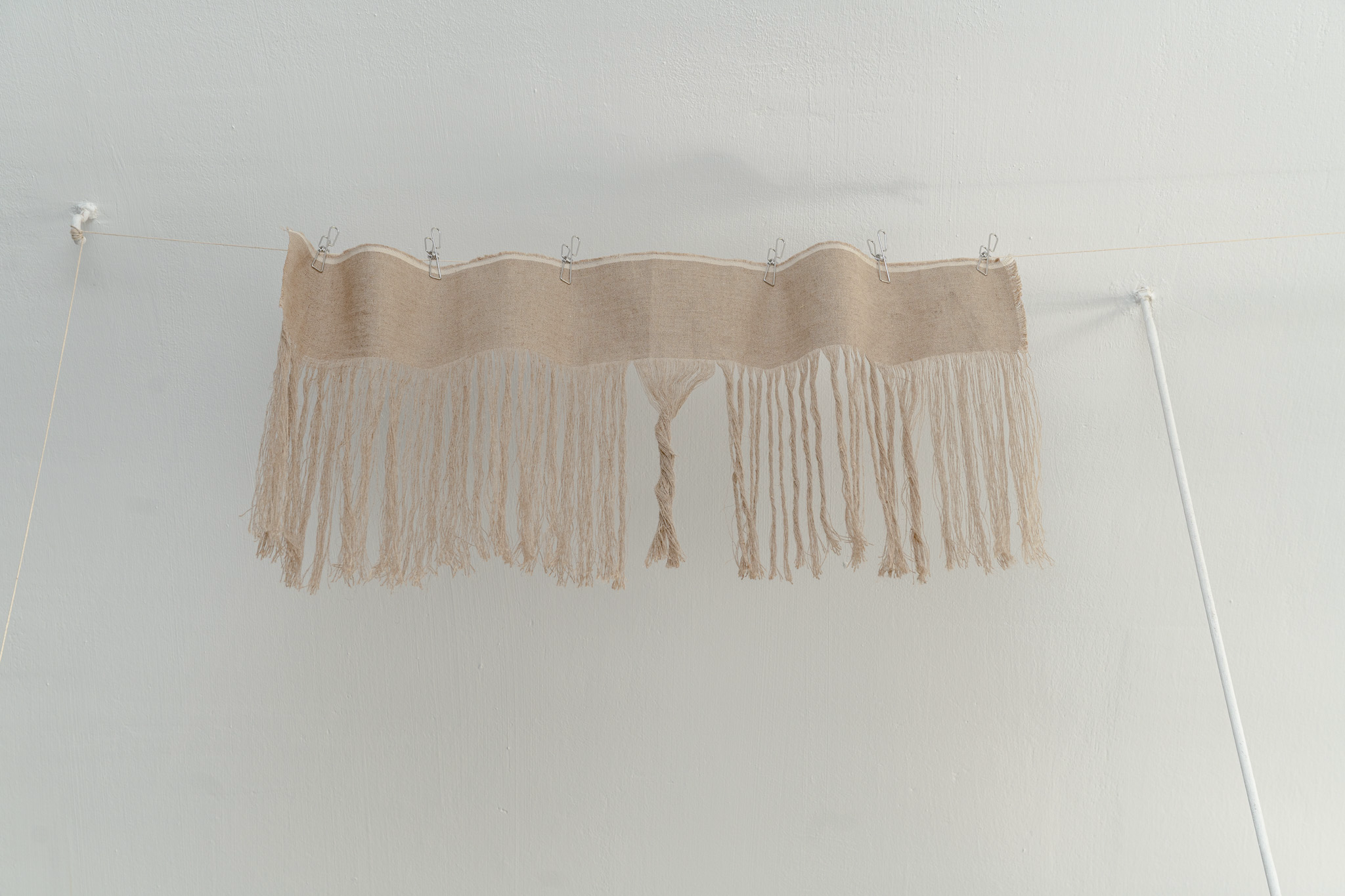
In my practice I work with textiles, and deconstruct them – pull out the threads from existing fabrics and make new shapes out of them. I then knot them together, wrap, drape, tie and make holes in the pieces, reconstruct. It is like rewriting something, just like as a gay guy living in a fortress, rewriting the history of the space with imaginary but possible scenarios of the surroundings.
During the residency, the evenings became an important part of my practice: I was waiting for the night to set in, and the tourists to disappear so I could go out with a Zoom recorder, walk around, imagine the site and create my own speculative history of it. My walks started with the most magenta sunset I have ever seen, continuing with recording the sounds of footsteps meeting the surface, making repetitive beats, breathing - in and out. The walks led me to the King’s Gate and around the Tom of Finland -type of darkrooms, oh, I mean, the fortress. On the way, I had to always be aware of geese families, or seagulls attacking from the air, aware of the wind that could be freezing cold, and other reminders that neither you nor that king are the main ones on these rocks on the island.
Helsinki is literally a rock and FREESTYLER city. The Japan of Europe, with karaoke as a very widely practiced form of entertainment. I happened to find myself in one of these places, where suddenly two Finnish women got to the microphones to sing - “die mother f*cker, die mother f*cker, die”. I was obsessed with this performance; it was the ultimate meeting point of rage and release.
The topic of rage has been circulating in my mind for some time. Rage as an emotion, as a state, as an energy. But most ridiculously, how it has become a part of everyday life in the attention economy. I have been observing how easily the brain gets hijacked through social media by utilising people's reactions and emotions, with content often targeted towards marginalised groups. Rage, anger and hatred have become so everyday-ish, just like geopolitical conflicts around the planet. Reading Şeyda Kurt’s Hate, the Uses of a Powerful Emotion, I came across a series of questions that stayed with me: “Where do power and powerlessness weave together? Where can we find hate in this patchwork? How can I sew it into a new dress? Who holds the fabric and thread of hate in their hands, stitches and drains it, and wraps the cloth of hate around the necks of those deemed powerless?”* These questions made me think about rage not only as something we feel, but also as something that is directed.
Here is the recipe to ruin your day productively: wake up, eat breakfast, drink coffee, open Instagram, check in with what’s happening around, get into some kind of right-wing populist hate content, get angry, start to read the comment section, get more angry. Then get even more angry because you let the emotions take over the beginning of your day, pass out, wake up again and give yourself another try, but this time at 12:00. Then start to get anxious about how unproductive the morning was, how you can’t afford non-monetised hours and how you are behind on everything. And also, it is extremely hot, and you feel like there is a new allergy developing; you sneeze more than you did years ago, but you have to stay functional because you have to pay your rent, because the landlord increased the price, not the square metres.
Nonetheless while attention is getting hijacked more guns are getting produced. Angry boys use them to express hatred. Everybody is just defending themselves: bombs are bombing and drones are droning. After that monuments are getting built. Men with great postures, bigger in muscles and smaller in dic*s – in the end it is the artists who are creating the monuments. ;)
Maybe the Three Smiths sculpture in Helsinki city centre is not the case. The three men are relatively short, gifted in the pelvic area and with nice bums. Interestingly, the proportions of the statue are made in such a way that instead of smashing the object in the middle, they would smash each other. The statue is supposed to be a symbol of collaboration, but ironically, at least for me, it works as a symbol of hurting.
During one of the gatherings organised by the Bioart Society, I met Lukáš Karaba, an artist researching mosquitoes. He told a story about sitting in country A and looking at country B. For a person crossing from one side to another, the territory changes, with different rules, different social norms, languages etc. But a mosquito can simply fly across. For the mosquito, it is the same air. I found this thought especially meaningful. The mosquito does not know where country A ends and country B begins. Birds don't know either. We just share air. We keep trying to solve contemporary crises through nationalistic approaches that celebrate a human-centred, or more precisely, a male-centred point of view - so-called HIS-story.
During the residency, I kept walking around the military island, avoiding aggressive birds. Maybe those birds have a right to be that way. Maybe the geese that migrated here had the right to be in Finland where there was no heatwave while the rest of Europe was burning.
When I was leaving the island with my heavy suitcases placed in the milk cart a tourist jumped suddenly in front of my cart, and I drove on his leg. He looked at me and said – you idiot! I looked at him and replied – no, you are an idiot.
*Şeyda Kurt, Hate: The Uses of a Powerful Emotion, 2025, 19.